
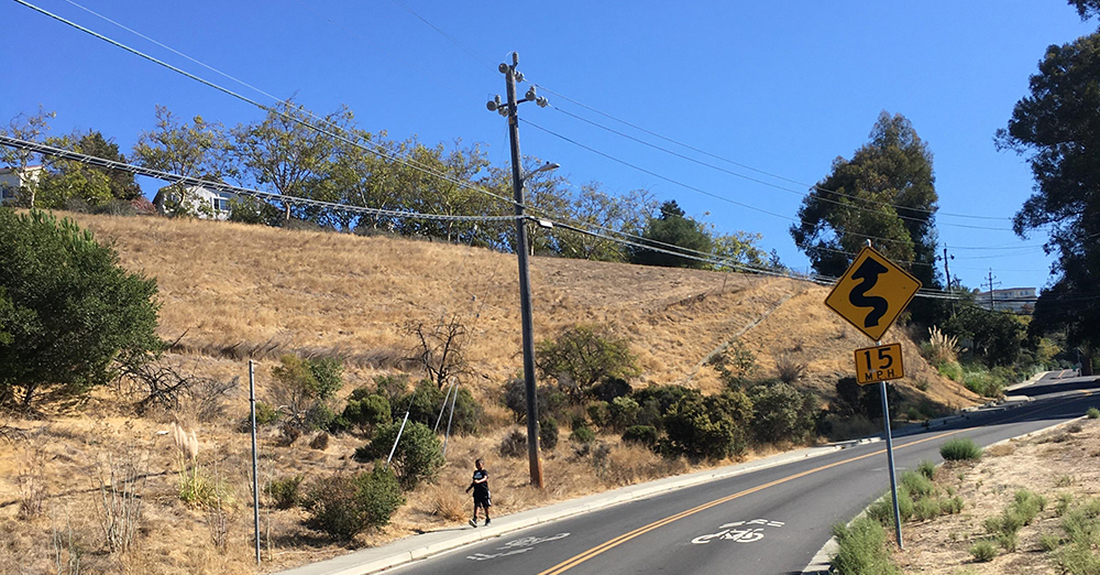
The West is running out of winter. Snowpack levels across nine states are sitting at less than half their normal levels for mid-February, and climate scientists are already warning that what follows could be one of the most fire-prone summers in recent memory. Electric utilities operating in the region need to ask themselves: Are the utility poles carrying power across millions of acres of fire-prone land built to survive what’s coming? Increasingly, the answer is no. But it doesn't have to be.
Record Low Snowpack Threatens the West with a Fiery Summer
The western United States is heading into spring with a serious deficit. Snowpack levels stretching from Washington down through Arizona and New Mexico and as far east as Colorado are at a record low. It’s the kind of shortfall that, historically, has spelled trouble for the months ahead.
The problem isn’t a lack of precipitation so much as a lack of cold. Much of the West has been experiencing one of its warmest winters on record, with temperatures in parts of Colorado pushing close to 80°F in early February. Rain has fallen where snow should, even at elevations of 7,000 to 9,000 feet. The result is a "snow drought," a warming-driven phenomenon distinct from a traditional dry spell, that has been quietly decimating the region’s water reserves before summer even begins.
Snowpack is less than half of normal levels for mid-February.
This matters enormously for wildfire risk. Snowpack is the West’s natural slow-release water system. It accumulates through winter and melts gradually into streams and reservoirs through spring. When that system fails, forests dry out faster and become far more vulnerable to fire by the time summer heat arrives. Research has also shown that recently burned forests melt their remaining snow faster than unburned areas, creating a feedback loop that makes recovery harder.
Fire Resistant Ductile Iron Poles Offer Utilities a Path Forward
As western utilities brace for another potentially devastating wildfire season, ductile iron utility poles can play a major role in mitigating risk and strengthening the grid. Independent testing from three separate evaluations has confirmed that ductile iron poles are among the strongest and most fire-resistant transmission poles.
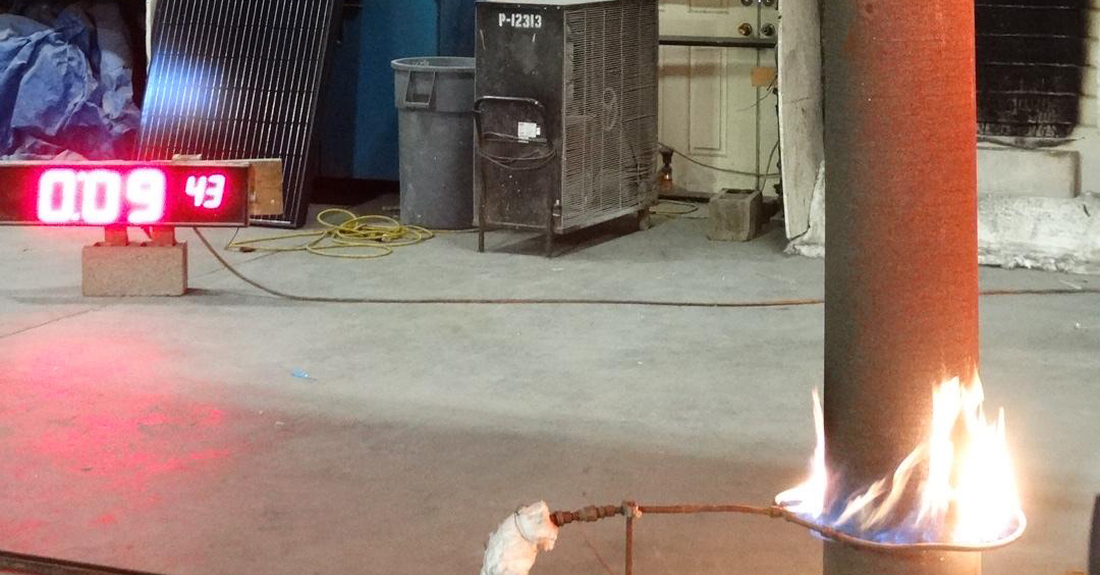
In tests conducted by the Western Fire Center, ductile iron poles showed no significant damage after being subjected to both fire and wind conditions, making them a highly durable option for utilities operating in high-risk zones. A more rigorous two-phase evaluation involving a full-scale burn followed by a structural load test found that even after sustained fire exposure, ductile iron poles were able to support a load of 6,500 pounds before failure, more than twice the 2,950-pound requirement set by the National Electrical Safety Code. A third test examined the Permasafe ceramic epoxy coating applied by McWane Poles, which, after exposure to temperatures exceeding 2,000°F, but did not sustain combustion once the flame source was removed.
Ductile iron poles can support a load of 6,500 pounds before failure—more than twice required by NESC.
The implications of these results for grid resilience are significant. Where a wooden pole might ignite and fail during a wildfire, potentially causing a cascading failure, a ductile iron pole is fire tested and heat tested to hold its structural integrity. Ductile iron also compares favorably on cost relative to steel and concrete alternatives, while outperforming wood on durability and fire resistance.
As snowpack declines and wildfire risk intensifies across the West, utilities can no longer rely on infrastructure designed for a different climate reality. Proactive investment in fire-resistant materials like ductile iron poles is a present-day necessity. Strengthening the grid today means reducing catastrophic failure tomorrow, protecting communities, and ensuring reliable power delivery even under the most extreme conditions.
The time to prepare for wildfire season is before it starts. Our team can help you evaluate where ductile iron poles can strengthen your infrastructure and protect the communities you serve. Contact us today to learn more.